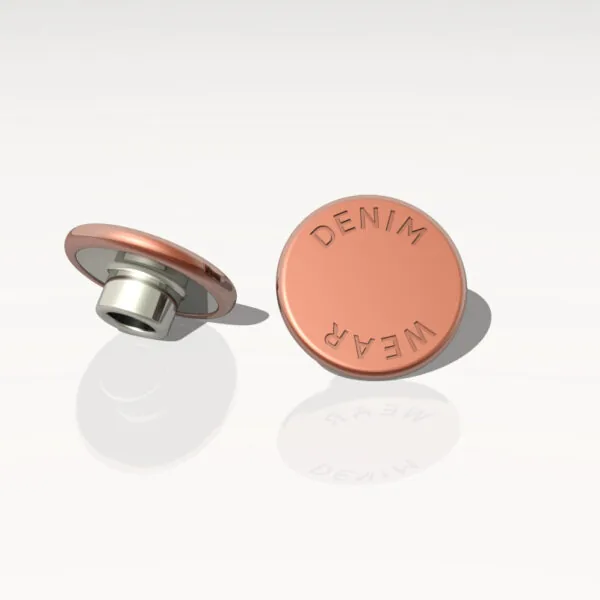
One of the most frequently asked questions in metal accessory procurement is: what is the difference between brass and zamak, and which is more suitable for which application? The answer depends not just on cost, but on the product's usage conditions, design requirements, and the standards of the target market.
Brass is an alloy of copper and zinc. Brass alloys used in textile accessories typically contain 63 to 70 percent copper, with the remainder zinc. This composition provides high tensile strength, superior corrosion resistance, and excellent machinability. Brass reliably handles mechanically stressed points particularly in denim, workwear, outdoor products, and leather accessories. For flat-geometry products manufactured by pressing, brass is the preferred material.
Zamak is an alloy consisting of 96 percent zinc with small amounts of aluminum, magnesium, and copper. Its low melting point allows complex three-dimensional forms to be produced by pressure casting. For logo or embossed designs, thin-walled structures, and unique geometries, zamak offers a distinct advantage over brass in terms of production flexibility. While its unit cost is generally lower, brass maintains superiority in long-term mechanical durability.
A practical decision framework: if the product will bear loads, be subject to pulling or tensile forces, and high longevity is expected, brass should be preferred. When complex logo details, three-dimensional forms, or cost-focused high-volume orders are involved, zamak provides a suitable alternative.
At Dikmen Metal, we produce at full capacity in both materials and advise our customers on the most appropriate material selection on a design and application basis.